

The Best Payment System for Travel Agencies in 2026
 Written byMOGU Team
Why the Payment System Determines Conversion in Travel Agencies
Definition: Payment System for Travel Agencies
A payment system for travel agencies is the structured set of tools, processes, and workflows that allow agencies to request, process, validate, record, and reconcile payments throughout the full travel sales cycle.
This system is not just a transaction mechanism. It is a critical part of the sales process because it connects three key dimensions:
- Customer experience: how easy and fast it is to pay
- Internal operations: automation and control
- Business results: conversion and cash flow
A modern system must integrate all these elements into one smooth, coherent workflow, eliminating gaps between the sales stage and the financial stage.
Direct Connection Between Payments and Sales
In the travel industry, payment is not the final step. It is a decisive moment in the buying process. It is where customer intent becomes real revenue.
According to digital industry benchmarks:
- More than 60% of users prefer to complete payment online without manual intervention
- Payment abandonment can exceed 50% when friction exists
- Simplified payment systems can increase conversion by 15% to 30%
Operational conclusion
improving your payment system directly impacts your ability to close sales.
Structural Problems in Travel Agency Payment Collection

Operational Friction and Lost Sales
Many agencies still use fragmented processes that create friction at the most critical point of the funnel.
The most common problems include:
- Bank transfers with manual validation
- Payment instructions sent by email or WhatsApp
- Lack of integration between proposal and payment
- Delays in payment confirmation
These frictions create clear consequences:
- Delays in the client’s decision
- Loss of urgency in the purchase
- More doubts and psychological friction
- Lower conversion rates
Key principle
the more complex the payment process, the lower the probability of closing the sale.
Impact on Cash Flow and Financial Control
The payment collection system also directly affects the agency’s financial structure.
An inefficient system creates:
- Delayed revenue: payments that take too long to confirm
- Lack of visibility: difficulty knowing what has been paid
- Reconciliation errors: discrepancies between sales and payments
- High operational cost: repetitive manual tasks
By contrast, an optimized system improves:
- Liquidity
- Financial forecasting
- Administrative efficiency
How an Efficient Payment System Works
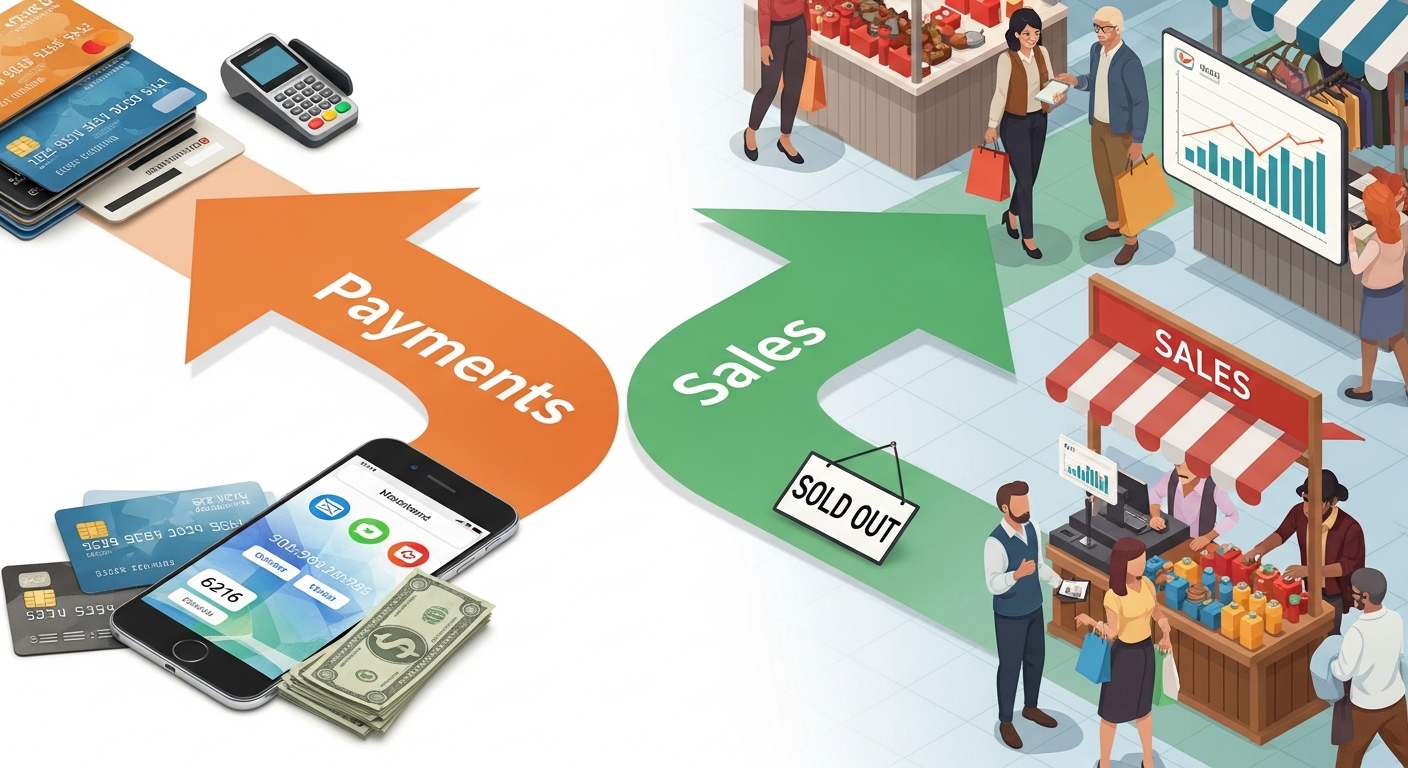
Framework: Optimized Payment Collection Model
A modern system follows a structured and automated workflow:
- 1. Generation: automatic creation of a payment request linked to the proposal
- 2. Integration: payment is part of the same environment as the sale
- 3. Execution: the client pays immediately using multiple payment methods
- 4. Confirmation: automatic payment validation
- 5. Recording: direct reconciliation within the system
This model eliminates the disconnect between selling and getting paid.
Automation as a Competitive Advantage
Automation does not just reduce operational workload. It becomes a growth driver.
Its main benefits are:
- Fewer human errors
- Faster payment collection cycles
- Improved customer experience
- Ability to scale operations
Result
more efficiency and more revenue with the same team.
Comparison of Payment Methods for Travel Agencies

Existing Models
- Bank transfer: high friction, low conversion
- Physical POS terminal: limited to in-person environments
- Payment links: partial improvement, but not fully integrated
- Integrated system: maximum efficiency and conversion
Key Comparison Criteria
- Payment collection speed
- Level of automation
- Customer experience
- Integration with the sales process
- Operational scalability
Integrated systems stand out across all indicators.
What the Best Payment System Should Include in 2026
Functional Checklist
- Payments integrated into proposals
- Multiple payment methods: card, bank transfer, digital wallets
- Automatic real-time confirmation
- Partial or installment payment management
- Financial control dashboard
Technical and Regulatory Requirements
- PSD2 compliance
- Strong Customer Authentication (SCA)
- Data security
- Integration with payment service providers (PSPs)
A complete system must meet both functional and regulatory requirements.
How to Reduce Travel Payment Abandonment
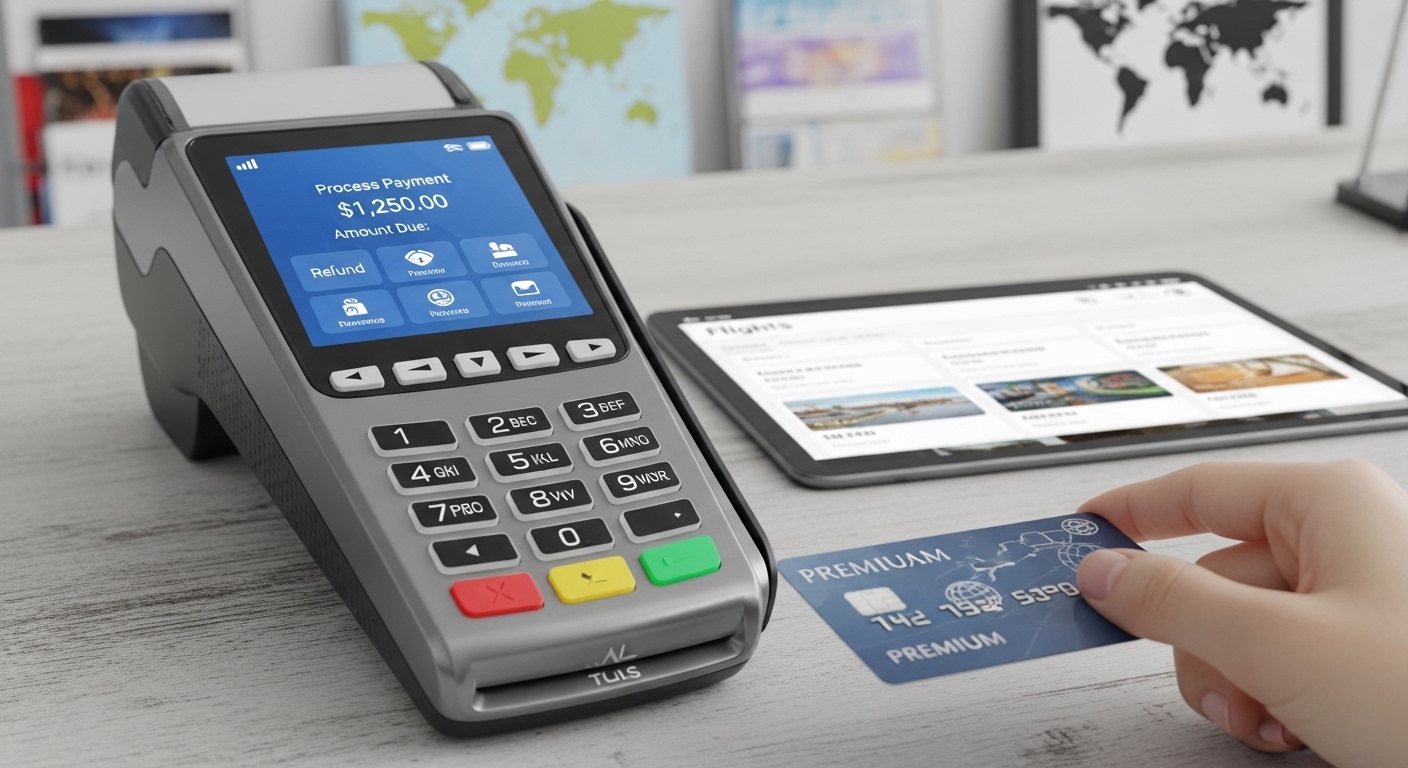
Critical Abandonment Factors
- Long or complex processes
- Lack of transparency
- Limited payment options
- Low trust in the process
Framework: Payment Optimization
- Reduce the number of steps
- Integrate payment into the proposal
- Confirm immediately
- Show all relevant information
General rule
the less effort the client perceives, the higher the conversion.
How MOGU Optimizes the Payment System
Full Integration Within the Sales Flow
MOGU connects payment with the travel proposal in one single environment.
This allows agencies to:
- Close sales at the moment of decision
- Eliminate manual tasks
- Reduce administrative errors
- Increase conversion
Replicable Operational Example
A typical workflow with MOGU looks like this:
- Create the itinerary
- Send the proposal to the client
- Client pays from the same link
- Payment is confirmed automatically
This process shortens closing time and removes friction.
Booking and Payment Trends for 2026
Full Digitalization of the Process
Agencies are moving toward fully digital models where sales and payment are part of one continuous workflow.
Invisible Payments
The goal is to remove the perception of payment as a complex task. The client pays without friction or interruption.
Financial Automation
Reconciliation, follow-up, and payment collection management will become fully automated.
Clear market direction
less manual intervention, more automation.
How to Choose the Right System for Your Agency
Decision Checklist
- Does it reduce payment friction?
- Does it increase conversion?
- Does it integrate with the sales process?
- Does it allow the business to scale?
- Does it improve financial control?
Mistakes to Avoid
- Choosing disconnected tools
- Ignoring the customer experience
- Not measuring the impact on sales
Start Selling More by Removing Payment Friction
The payment system is one of the highest-impact factors in a travel agency’s performance.
Optimizing payment collection means:
- Reducing friction
- Accelerating decisions
- Improving the experience
- Increasing revenue
It is not just an operational improvement. It is a growth strategy.
FAQs About Payment Systems for Travel Agencies
What is a payment system for travel agencies?
It is a set of tools and processes that allow agencies to manage payment collection, validation, and reconciliation within the travel sales flow.
How can a travel agency improve payment collection?
By integrating payment into the proposal, reducing friction, and automating confirmation.
Which payment system increases sales the most?
An integrated payment system within the sales flow generates the highest conversion.
What impact does the payment system have on the business?
It directly affects conversion, cash flow, and operational efficiency.
Is PSD2 compliance mandatory?
Yes, in Europe it is mandatory to ensure secure electronic payments.
More from the MOGU blog
Keep reading
.png)
Common Group Travel Mistakes and How to Avoid Them
Discover the most common mistakes when organising group trips and learn how to improve profitability, payment collection and agency operations.
2026-06-25
.png)
The future of AI in travel agencies: what's coming in 2026
Discover how AI will transform travel agencies in 2026 and how to adapt so you can automate, sell more, and stay ahead of the curve
2026-06-16

How to Improve the Payment Experience at Your Travel Agency
Improve payment management at your travel agency with automation, payment links and a billing CRM that reduces friction and increases conversions.
2026-05-29
Curious about MOGU?
See it in action — no strings attached