
The best payment system for travel agencies in 2026

The best payment system for travel agencies in 2026
 Written byMOGU Team
Why the payment system determines conversion in travel agencies
Definition: payment system for travel agencies
A payment system for travel agencies is the structured set of tools, processes and flows that lets you request, process, validate, record and reconcile payments across the full trip-sale cycle.
This system is more than a transactional mechanism. It's a critical piece of the commercial process because it links three key dimensions:
- Customer experience: ease and speed to pay
- Internal operations: automation and control
- Financial outcome: conversion and cashflow
A modern system has to integrate all of these into a single coherent flow, eliminating the gap between the sales stage and the financial stage.
Direct relationship between payments and sales
In the travel sector, payment isn't the last step — it's a decisive moment within the buying process. It's the point where customer intent turns into real revenue.
According to digital industry benchmarks:
- More than 60% of users prefer to complete payment online with no manual handover
- Drop-off in payment flows can exceed 50% when there's friction
- Simplified payment systems can lift conversion by 15% to 30%
Operational takeaway
improving the payment system has a direct impact on the ability to close sales.
Structural payment problems in travel agencies

Operational friction and lost sales
Many agencies still rely on fragmented processes that introduce friction at the most critical funnel stage.
The most common problems include:
- Bank transfers with manual validation
- Sending instructions over email or WhatsApp
- No integration between proposal and payment
- Delays in confirming payment
These frictions cause clear effects:
- Delays in customer decisions
- Loss of urgency in the purchase
- More hesitation and psychological friction
- Lower conversion rate
Key principle
the more complex the payment, the lower the probability of closing.
Impact on cashflow and financial control
The collection system also affects the agency's financial structure directly.
An inefficient system causes:
- Revenue delays: payments that take time to confirm
- Lack of visibility: difficulty knowing what's been collected
- Reconciliation errors: mismatches between sales and payments
- High operational cost: repetitive manual tasks
An optimized system, by contrast, improves:
- Liquidity
- Financial forecasting
- Administrative efficiency
How an efficient payment system works
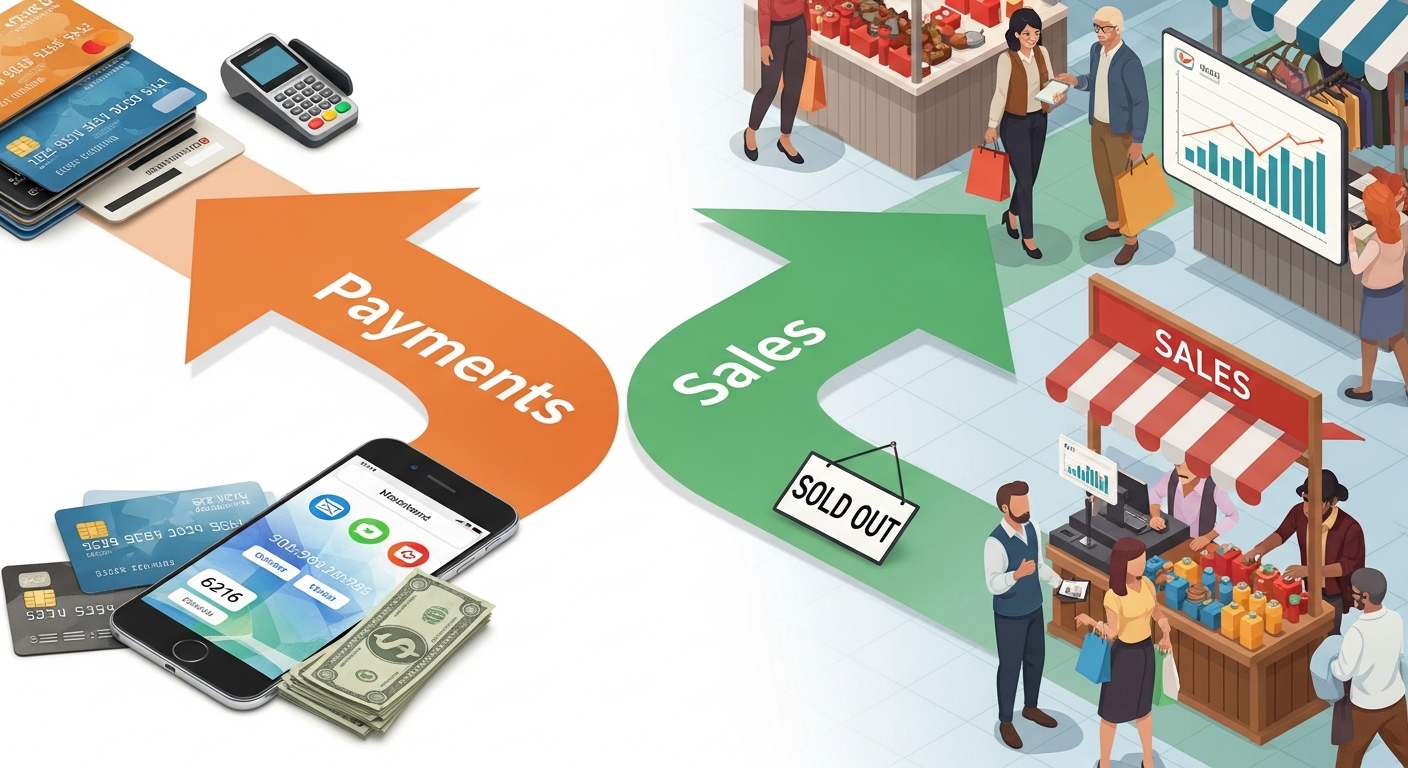
Framework: optimized collection model
A modern system follows a structured, automated flow:
- 1. Generation: automatic payment request linked to the proposal
- 2. Integration: payment is part of the same environment as the sale
- 3. Execution: the customer pays instantly with multiple methods
- 4. Confirmation: automatic payment validation
- 5. Recording: direct reconciliation in the system
This model removes the disconnect between selling and collecting.
Automation as a competitive advantage
Automation doesn't just reduce operational load — it acts as a growth engine.
Its main benefits:
- Fewer human errors
- Faster collection cycle
- Better customer experience
- Ability to scale operations
Result
more efficiency and more revenue with the same team.
Comparison of payment methods in travel agencies

Existing models
- Bank transfer: high friction, low conversion
- Physical POS: limited to in-person environments
- Payment links: partial improvement, not integrated
- Integrated system: maximum efficiency and conversion
Key comparison criteria
- Collection speed
- Level of automation
- Customer experience
- Integration with the sales process
- Operational scalability
Integrated systems stand out across every indicator.
What the best payment system should include in 2026
Functional checklist
- Payments embedded in proposals
- Multiple payment methods (card, transfer, wallets)
- Real-time automatic confirmation
- Partial or installment payment management
- Financial dashboard
Technical and regulatory requirements
- PSD2 compliance
- Strong customer authentication (SCA)
- Data security
- Integration with payment service providers (PSP)
A complete system has to meet both functional and regulatory requirements.
How to reduce drop-off in travel payments
Critical drop-off factors
- Long or complex processes
- Lack of transparency
- Limited payment options
- Low trust in the process
Framework: payment optimization
- Reduce the number of steps
- Embed the payment in the proposal
- Confirm immediately
- Show every piece of relevant information
Rule of thumb
the less effort the customer perceives, the higher the conversion.
How MOGU optimizes the payment system
Full integration in the sales flow
MOGU connects payment with the travel proposal in a single environment.
This lets you:
- Close sales at the moment of decision
- Eliminate manual tasks
- Reduce admin errors
- Lift conversion
Replicable operational example
A typical flow with MOGU:
- Itinerary creation
- Proposal sent to the customer
- Payment from the same link
- Automatic confirmation
This process shortens time-to-close and removes friction.
Booking and payment trends for 2026
Full process digitalization
Agencies are moving toward fully digital models where sale and payment are part of a single continuous flow.
Invisible payments
The goal is to remove the perception of payment as a complex task. The customer pays without friction or interruptions.
Financial automation
Reconciliation, follow-up and collection management will be fully automatic.
Clear market direction
less manual intervention, more automation.
How to choose the right system for your agency
Decision checklist
- Does it reduce payment friction?
- Does it lift conversion?
- Does it integrate with the sales process?
- Does it let you scale the business?
- Does it improve financial control?
Mistakes to avoid
- Choosing disconnected tools
- Ignoring customer experience
- Not measuring the impact on sales
Start selling more by removing payment friction
The payment system is one of the highest-impact factors on a travel agency's performance.
Optimizing collections means:
- Reducing friction
- Speeding up decisions
- Improving the experience
- Growing revenue
It's not an operational tweak. It's a growth strategy.
FAQs about payment systems for travel agencies
What is a payment system for travel agencies?
It's a set of tools and processes that lets you manage payment collection, validation and reconciliation across the trip-sale flow.
How do you improve collections in a travel agency?
By embedding payment in the proposal, reducing friction and automating confirmation.
Which payment system lifts sales the most?
The one integrated with the sales flow generates the highest conversion.
What impact does the payment system have on the business?
It directly affects conversion, cashflow and operational efficiency.
Is PSD2 compliance mandatory?
Yes — in Europe it's mandatory to guarantee security in electronic payments.
Curious about MOGU?
See it in action — no strings attached